The larger, more well-known cities in Italy such as Rome, Milan and Venice are often the ones travelers plan to visit first.That’s understandable as they’re well publicized and full of interesting unique sites that attract tourists in their millions.
Don’t venture any further than the big cities though and you’ll be missing out on discovering what is the true essence of Italy. That essence can only be found in the smaller towns and villages where life goes on at a completely different pace.
Whether you’re staying in the north or south of the country, take a drive or bus ride along the coast and you’ll discover characterful Italian fishing villages. They are places where you’ll come across fishermen sitting on the harborfront mending their nets or selling the catch of the day to the locals as they have done for centuries.
Venture inland and you’ll find sleepy Italian mountain towns with such peaceful atmospheres it really does seem as if time can stand still. That peace, even in quaint Italian villages and towns, doesn’t last for long. The illusion is usually shattered by the tolling of a church bell or the barking of a street dog as it wakes from its afternoon siesta to chase a cat across the village plaza.
Where Are The Prettiest Towns and Villages in Italy?
No matter what part of Italy you travel to there’ll be a small town or village not too far away that will be worth taking time out to explore. Detailed below are some of the best towns and villages in Italy that you won’t want to miss if you’re staying anywhere near them.
1. Positano, Amalfi Coast
Population – 3,950
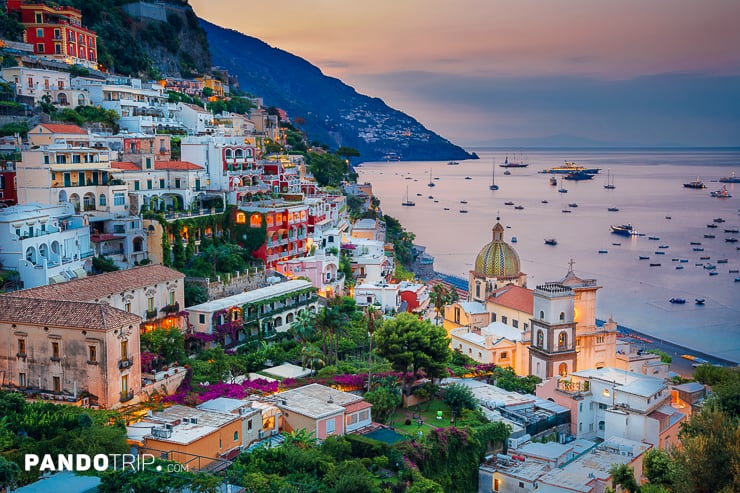
Positano is a coastal village around sixty miles south of Naples that occupies a sheltered bay backed by mountains. In Positano pastel colored houses cover the steep hillsides in tiers adding a touch of manmade beauty to that created by nature’s hand.
The only way to explore the winding streets of this village on the Amalfi coast is on foot, but it will test your calf muscles. Once you’ve climbed up to the Church of Santa Maria Asunta to take in the spectacular views of the Gulf of Salerno, have a stroll along the shingle beach and treat yourself to a plate of seafood in a waterfront restaurant.
2. Riomaggiore, Cinque Terre
Population – 1, 540
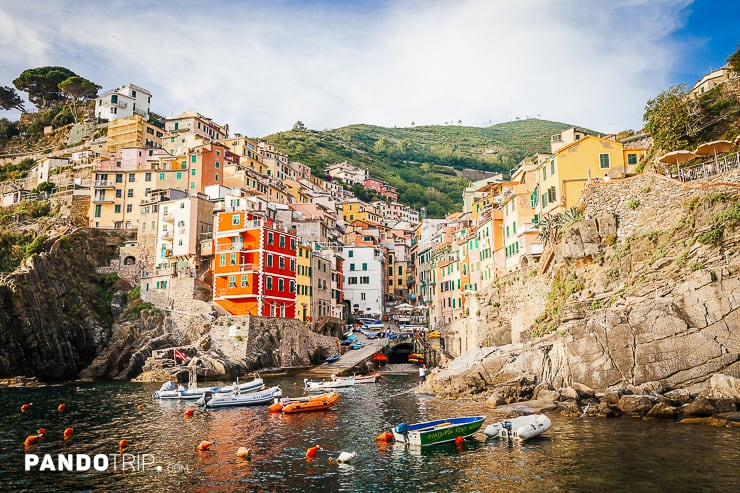
Riomaggiore is located on Italy’s northwest coast midway between the cities of Genoa and Pisa and is one of the cluster of five medieval Italian villages that make up the UNESCO World Heritage Site, Cinque Terre. The houses of Riomaggiore are built on the sheer cliff sides overlooking a miniscule bay where the local fisherman anchor their boats. It’s a picturesque setting that’s been in existence since the 13th century.
If you’re not planning on hiking the Via dell’Amore, the coastal path which connects Riomaggiore to neighboring Manarola, don’t miss heading down the village main street, finding a sidewalk terrace and trying some of the locally produced Riomaggiore wine.
3. Polignano a Mare, Puglia
Population – 18,000
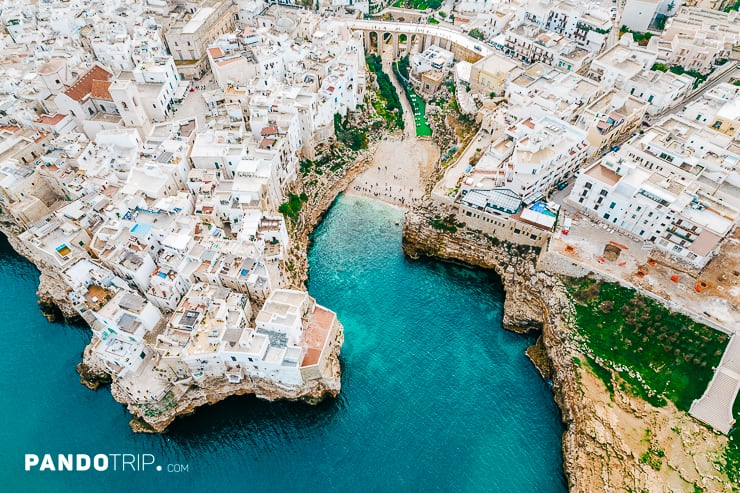
Polignano a Mare is one of the small towns in Italy by the sea that’s as much a must-visit for historians as it is for beach lovers. Polignano a Mare is in the Puglia region between the port cities of Bari and Brindisi on the country’s southeast coast.
Polignano a Mare’s outstanding features are the stunning white cliffs of the Ponte dei Lapilli cove, its sheltered white pebble beach, its Roman era viaduct and the nearby Benadictine monastery, San Vito Abbey with its belltower dating from the 16th century.
4. Orta San Giulio, Piedmont
Population – 1,260
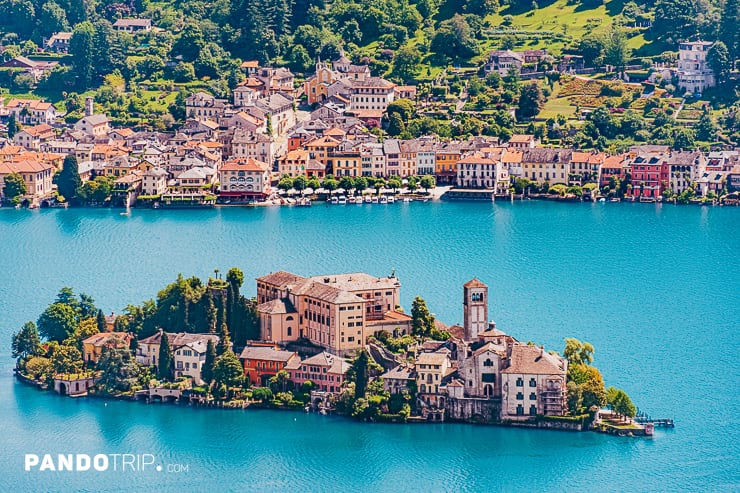
High up in the northern Piedmont region of Italy, Orta San Guilio is as close to the Swiss border as it is to Milan. Almost an island, but not quite, this Italian mountain town is built on a peninsula which juts out into Lake Orta. A more scenic place would be hard to find.
Orta San Guilio is a peaceful spot favored by artists and writers for its natural beauty and tranquility. A popular activity here is taking the boat from the waterfront town square across the lake to the even more picturesque island of San Giulio where there’s a historic basilica. If you’re looking for creative inspiration, you’ll find it here.
5. Bellagio, Lake Como
Population – 3,820
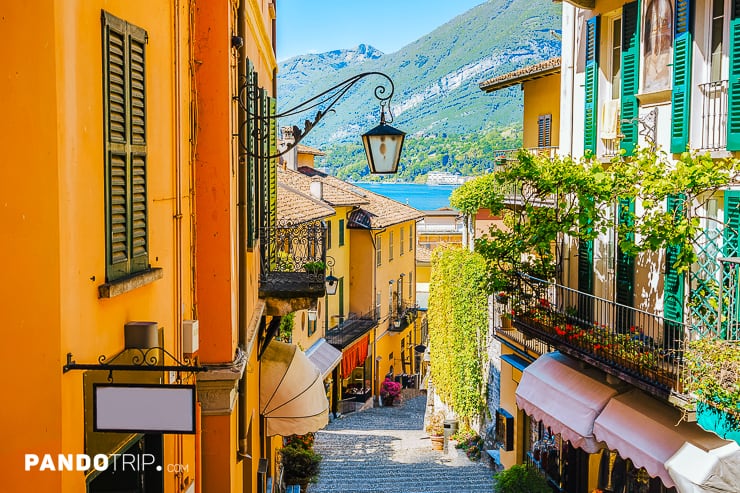
Bellagio is a mountain town in Italy around an hour and a half’s drive north of Milan with a real wow factor. Why? Bellagio occupies part of the southern shore of Lake Como so is fronted by a superb stretch of water and backed by incredible alpine scenery that is, for want of better words, absolutely breathtaking.
Bellagio is also renowned for its elegant architecture, and cobbled streets lined with cafeterias, restaurants and boutiques. It may be something of a tourist trap but what tourist doesn’t mind being entrapped by a town as beautiful and captivating as Bellagio is?
6. Spello, Umbria
Population – 8,580
Spello is a medieval mountain town in Italy with all the attributes of a proverbial time capsule. Located at the base of Mount Subasio, not far from the better known town of Assisi in central Italy, Spello is around two hours drive north of the Italian capital, Rome.
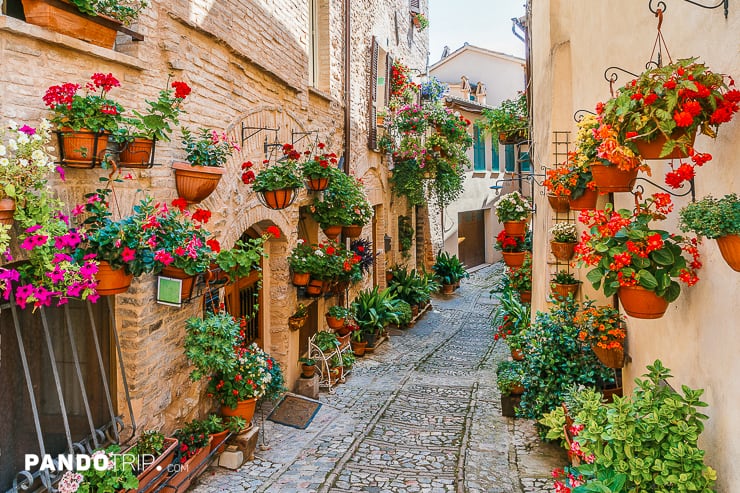
Set out to explore Spello and you’ll discover a town that hasn’t superficially changed for centuries. Wander the streets and you’ll be walking past houses built from locally quarried stone decked with colorful plants in terracotta pots, you’ll encounter Roman ruins from the first century BC and come across more churches with elaborate frescoes than a town of this size probably really needs.
7. Limone sul Garda, Lake Garda
Population – 1,165
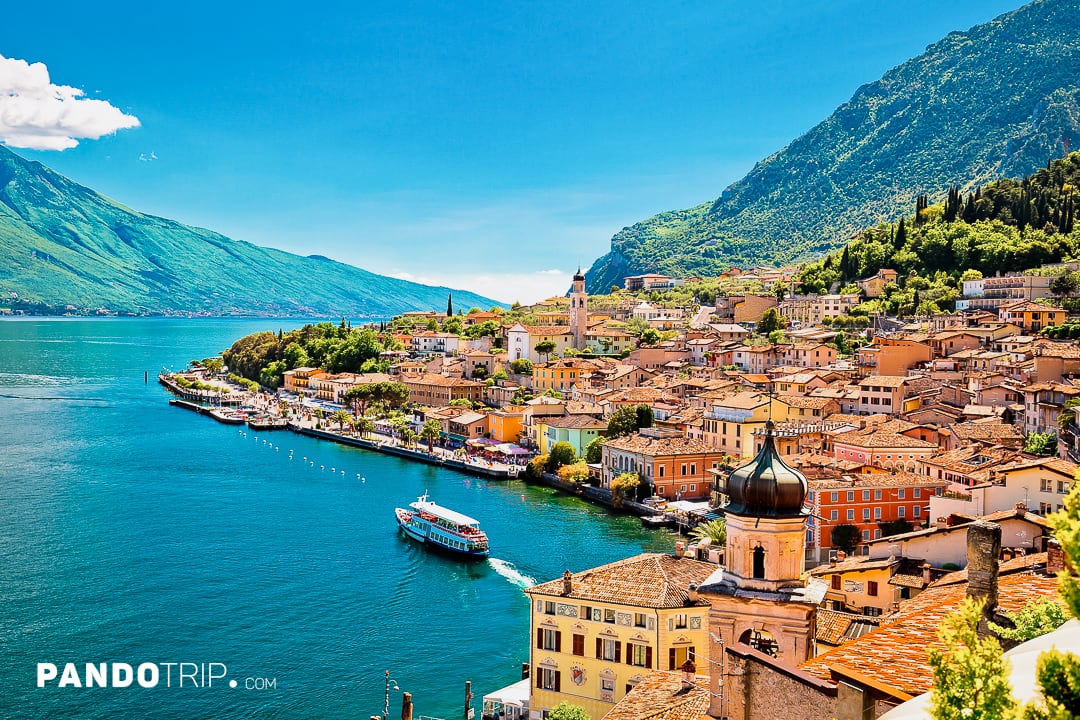
If you’re seeking to find an Italian out-of-this-world paradise, look no further than Limone sul Garda. Limone may translate to lemon in English, but there’s nothing of the bitter fruit about this stunning location on the northwest shore of Lake Garda.
Limone sul Garda is a little piece of heaven that dropped down to occupy a space on earth and basically acquired its acidic name because it’s a great spot for growing citrus trees. It’s also an ideal place for outdoor activities like cycling, hiking and just chilling on the beach.
8. Tropea, Calabria
Population – 6,360
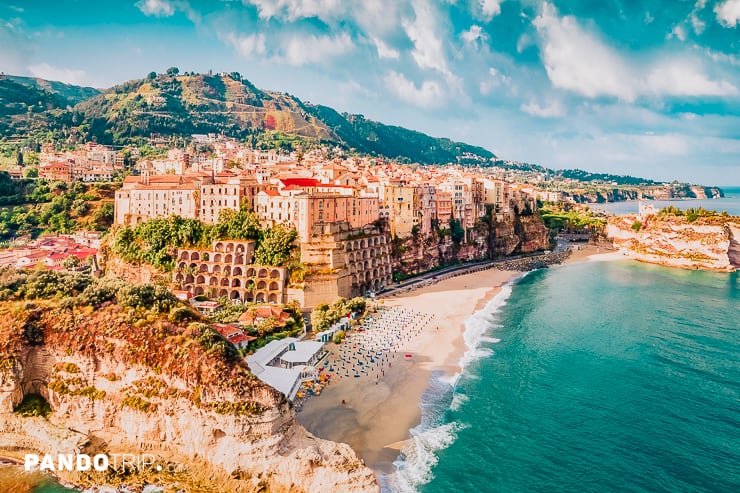
Tropea is a medieval town located almost on the very tip of Italy’s boot-shaped southwest coast. It’s an Italian town that stands out from the others because everything apart from the sea, the cliffs, the beaches and the houses, are all outstandingly white.
The historic center of Tropea sits high up on a craggy limestone hill peppered with caves and overlooks the crystal waters of the Gulf of Saint Euphemia. It’s a part of Italy that’s become known as the Coast of the Gods and not without good reason. Tropea was also recently awarded the accolade of prettiest village in Italy so is a definite must visit when you’re in the vicinity.
9. Manarola, Cinque Terre
Population – 350
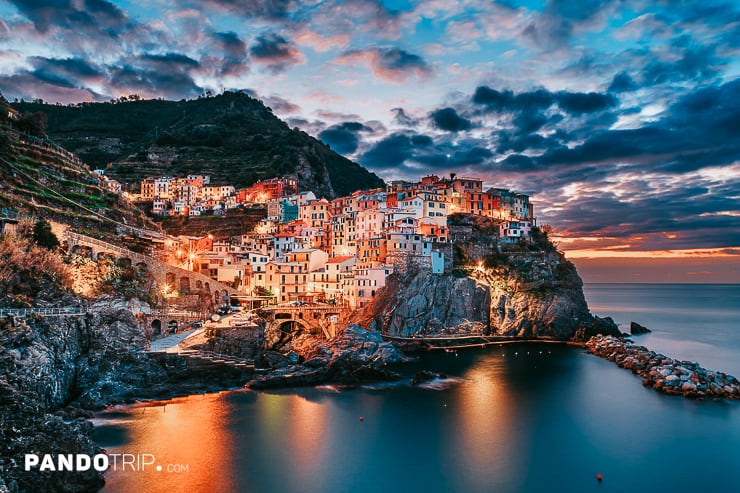
Manarola is the second smallest village in the group that makes up the UNESCO World Heritage Site of Cinque Terre. While it may lack size and population, less than four hundred people live there on a permanent basis, it’s certainly not lacking in eye appeal.
Built on the side of a cliff that backs a small bay, Manarola is connected by coastal trails to both Riomaggiore and Corniglia. It would be nigh on impossible to be there without taking time to hike to both. Stop in between to enjoy a lunch of fresh fish at a restaurant in the piazza or go for a refreshing swim in the bay. The water is deep and perfect for free diving.
10. Alberobello, Apulia
Population – 10,730
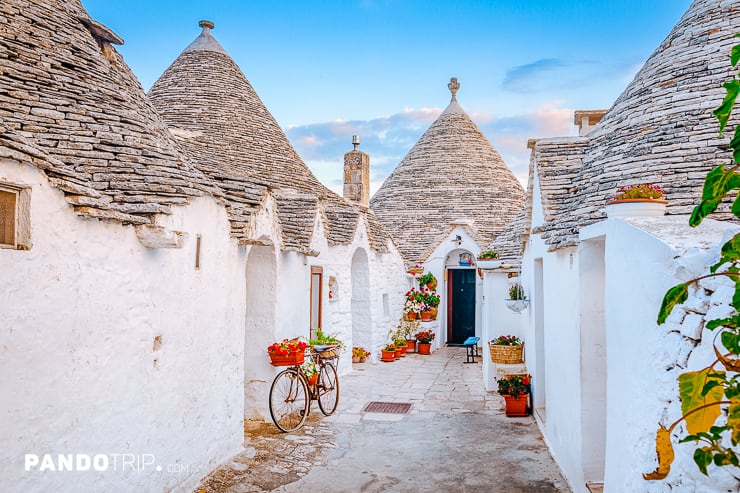
When you want to see something completely different from scenic, cliffside coastal villages you need to visit the Italian mountain town of Alberobello. Alberobello is in the Apulia region of the country which lies inland between the cities of Bari and Brindisi and is famous for its unusual houses.
While there are a few square houses in Alberobello, the majority are circular and topped with conical-shaped thatched roofs. Originally built as temporary homes for agricultural workers, the trulli have now become a permanent fixture of the Apulian landscape and are a designated UNESCO World Heritage Site.

Comments (2)